
Leading through Layoffs
This is the story of how I oversaw a design team to redesign Xodo, while improving the employee morale and team culture during layoffs.
To comply with the NDA, confidential information has been omitted and obfuscated. This case study is published with the approval of Apryse.
CHAPTER ONE
OVERVIEW
| At a Glance
My Role Product Design Manager at Apryse
Challenges 70% decrease in headcount due to economic reasons
Reduced employee morale
Loss of knowledge and skills
Impact Increased employee engagement score by 20%
Achieved 10M downloads
Maintained 4.6 app store rating
| Background
Apryse is a software company that provides document-processing technologies for 2000+ enterprises and over 30 million consumers.
As with many tech companies around the world, there has been layoffs due to economic reasons. Specifically, a drastic 70% reduction of workforce in my design team.
| The Problem
I faced many challenges before and after the layoff event:
Remaining employees experiencing survivors’ guilt and uncertainty
Decrease in engagement and satisfaction scores
Loss of product knowledge and design skills within the team
| The Goals
Beyond learning how to deliver the same quality experiences with only 30% of the remaining Product Designers, I engaged with Human Resources, Finance, Heads and VPs to tackle problems affecting our teams' morale.
My high level goals were to navigate this new downsized environment while maintaining engagement, productivity and app metrics, and continue creating great user experiences through reskilling and reallocating job responsibilities.
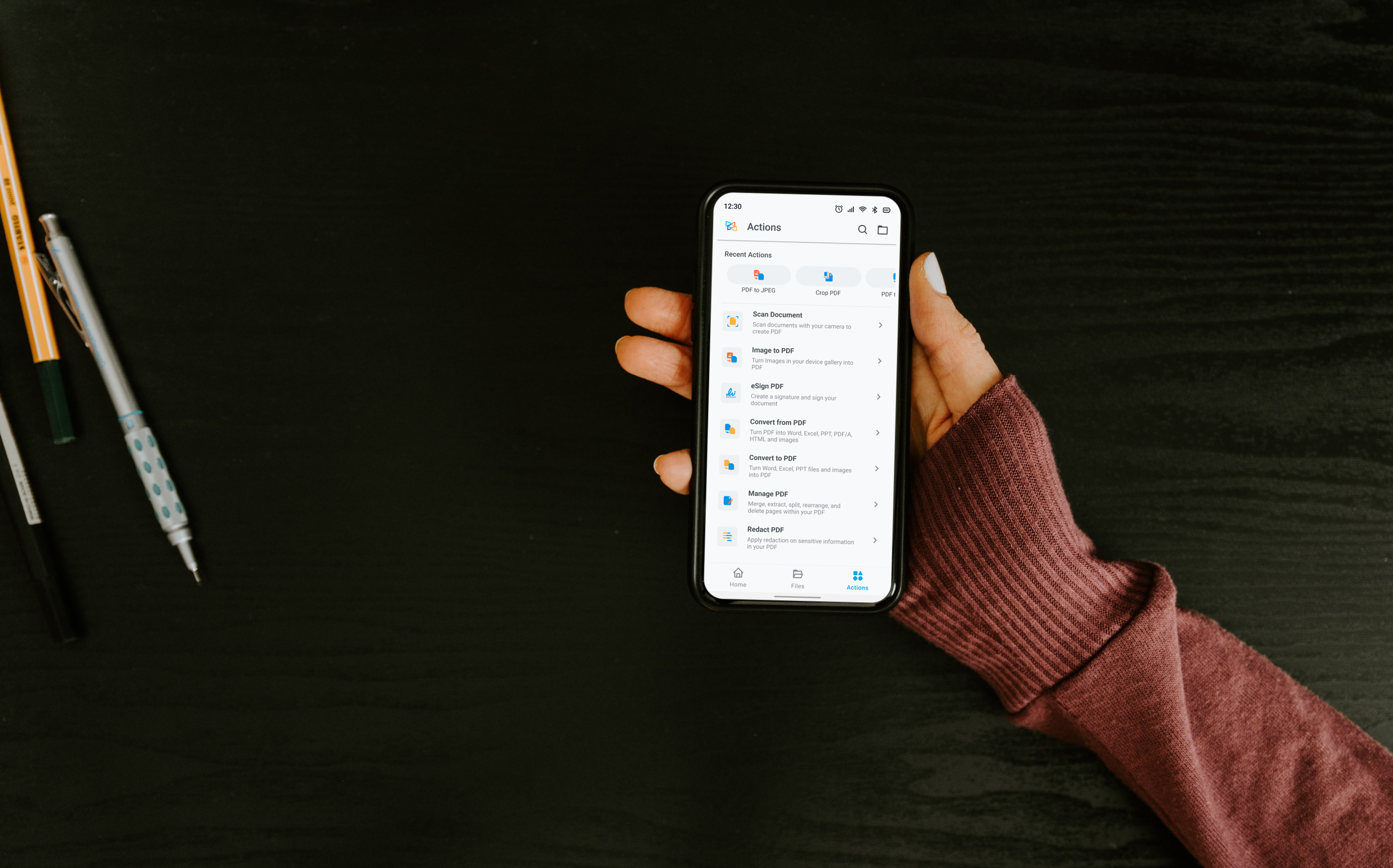
The scope of Xodo, our document viewer app on Android, was to identify users' pain points through insights derived from interviews, map the potential solutions based off that research, and create a new interface and flow.
CHAPTER TWO
SETTING THINGS UP
| Restructuring the Team
I went from managing a multidisciplinary team of 14 designers to four in 2023. Although everyone was understanding of the financial reasons behind this layoff, nonetheless it bought forth newfound concerns regarding job security and their workload.
I ensured my team took care of their mental health first; I hosted Ask Me Anything (AMA) meetings where I faciliated a transparent and open space for conversations, referred individuals to the company's well-being benefits programs such as counselling services, and initiated fun game sessions to unwind.
At the same time, the department structure needed a revamp. Previously, design acted as a shared service between all the products. The reduced design team meant it had to be restructured to maximize effectiveness. Therefore I created a new department structure, where each designer is assigned to specific scrum teams.
| Reskilling and upskilling
Understanding gaps in skills and how to reallocate projects was just the beginning. Previously, I had designers dedicated to research and to our design systems; now, each designer was expected to take on these additional tasks in order for the product to maintain the same quality.
I created a learning plan and mentored each designer on filling their skill gaps, which was were essential to rebuilding their confidence.
In order to maintain the same pace of shipping products, which for us was a 2 week sprint schedule, I rolled up my sleeves more than normal by conducting user interviews and iterating designs in Figma.
| Rescoping Projects
A reduced workforce meant I had to rethink the scope of all other projects. I worked closely with product management and we determined Xodo to be our number one priority for this quarter, so other products were descoped for a few months in order to avoid burnout.
| Research and Synthesis
My team collaborated with product management to conduct user interviews, which uncovered pain points and needs for the next version of the product.
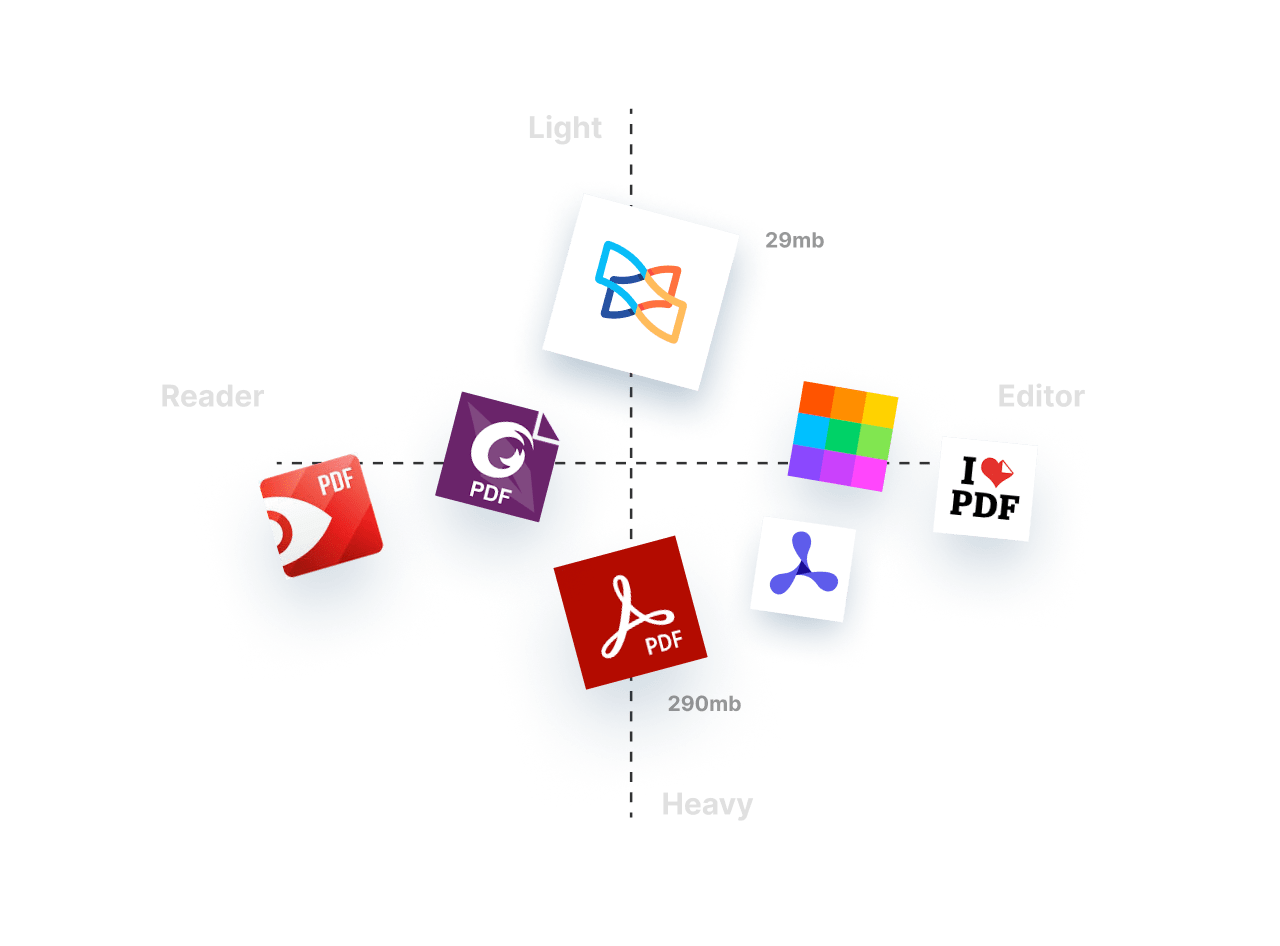
I also asked my designers to analyze competitors in order to gain a deeper understanding of where the market is, and ultimately decided on straddling the balance between Reader vs Editor, while offering all essential features in a lightweight package.
The data analysis tools my team used to conduct quantitative research were Mixpanel, Flurry, Google Play Console, and iOS Connect.
My role here was to guide designers through the research and synthesis process by providing tips and best practices, mentoring them through challenging steps, and reviewing the deliverables produced.
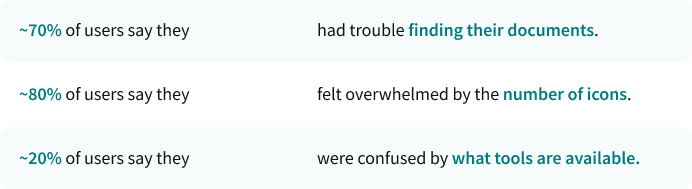
I asked my team to summarize our findings into the below user needs:
CHAPTER THREE
ITERATING DESIGNS
| Tackling Usability Issues
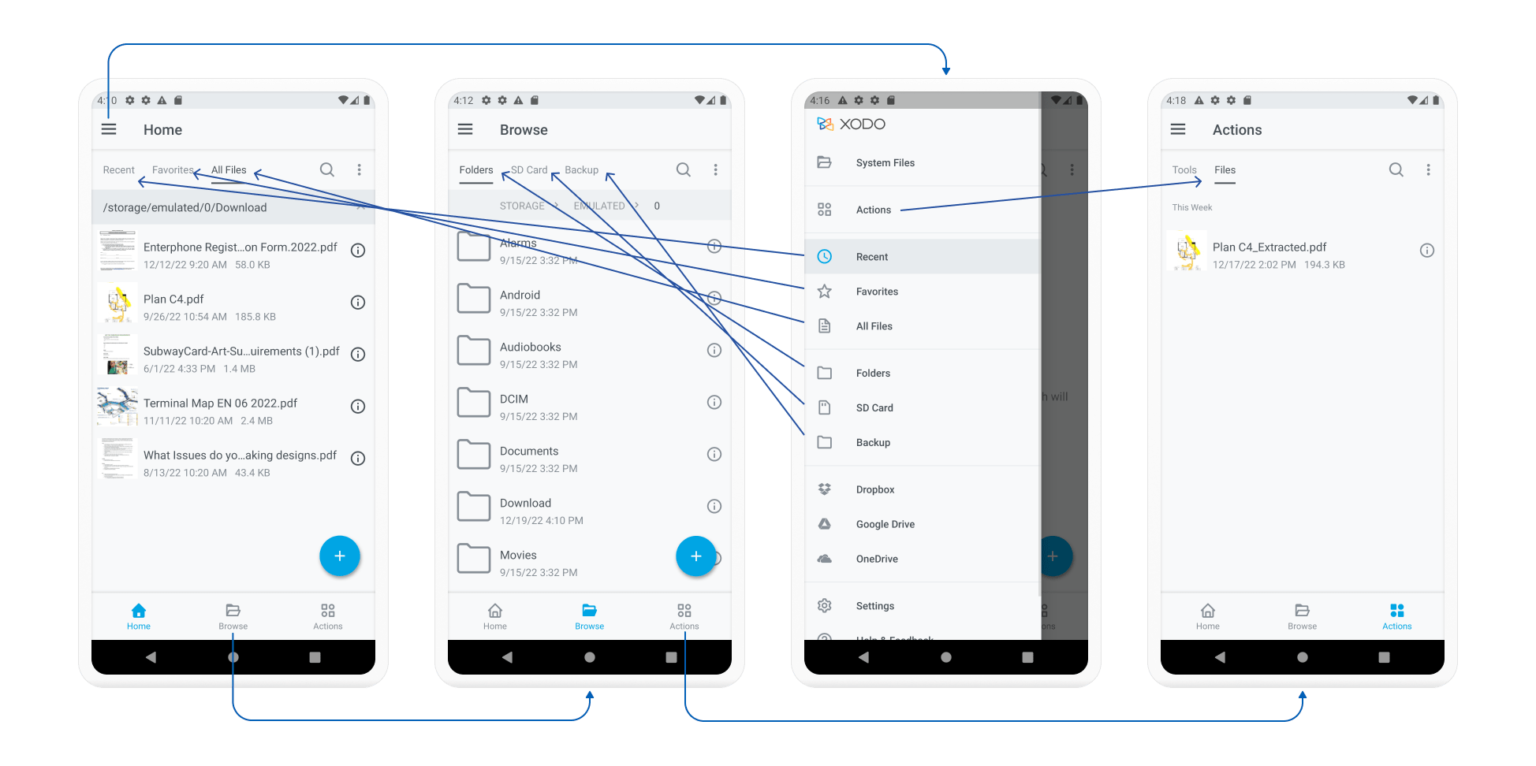
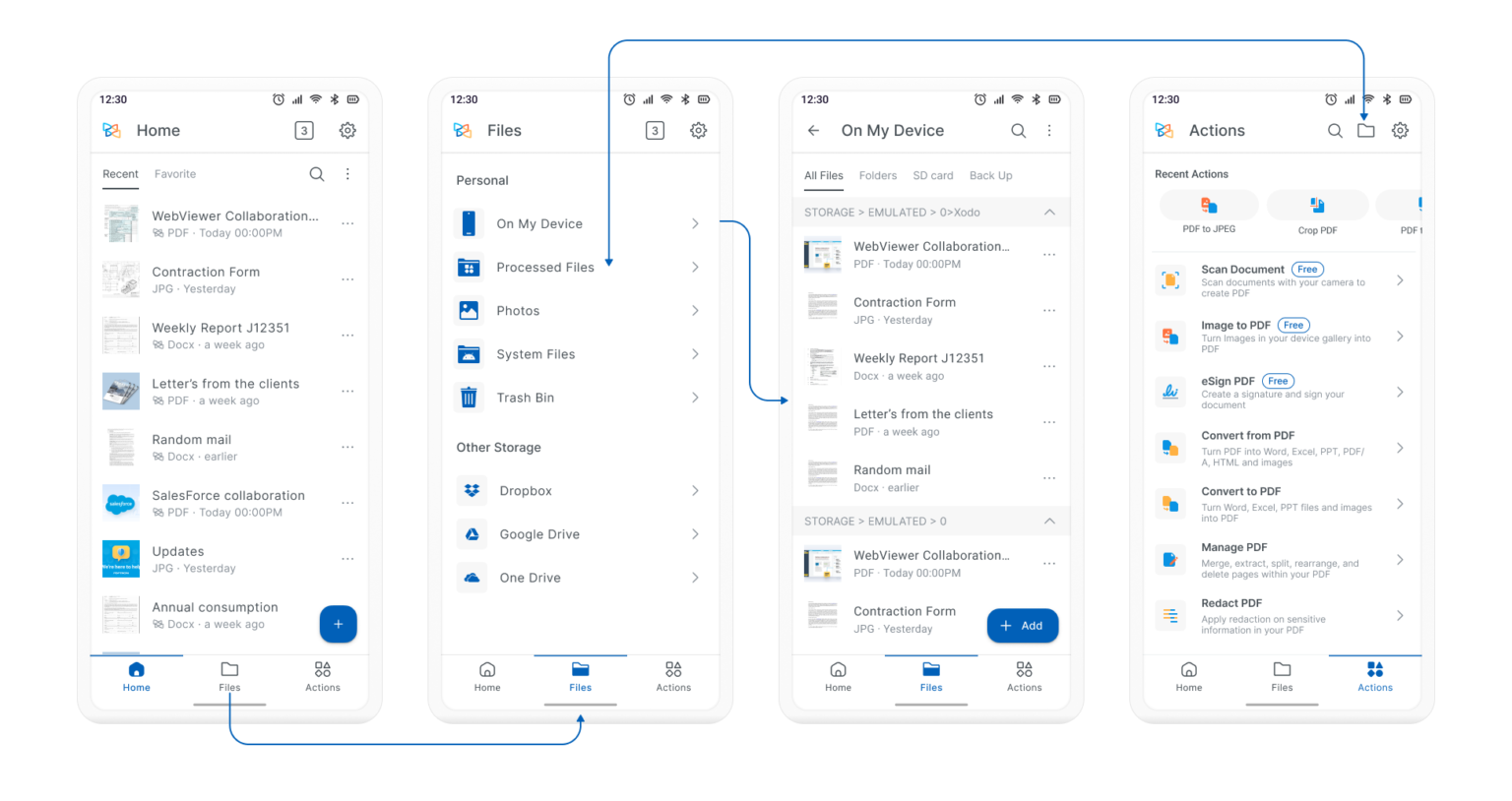
One of the common usability concerns my team found through research was that it was difficult to navigate within the app, and users had trouble finding tools and documents.
As illustrated below, the previous user flow was confusing:
After mapping out a new information architecture, iterating and testing again, my designers came up with a simplified and clearer flow, where we implemented a centralized space for file browsing:
| High-Fidelity Designs
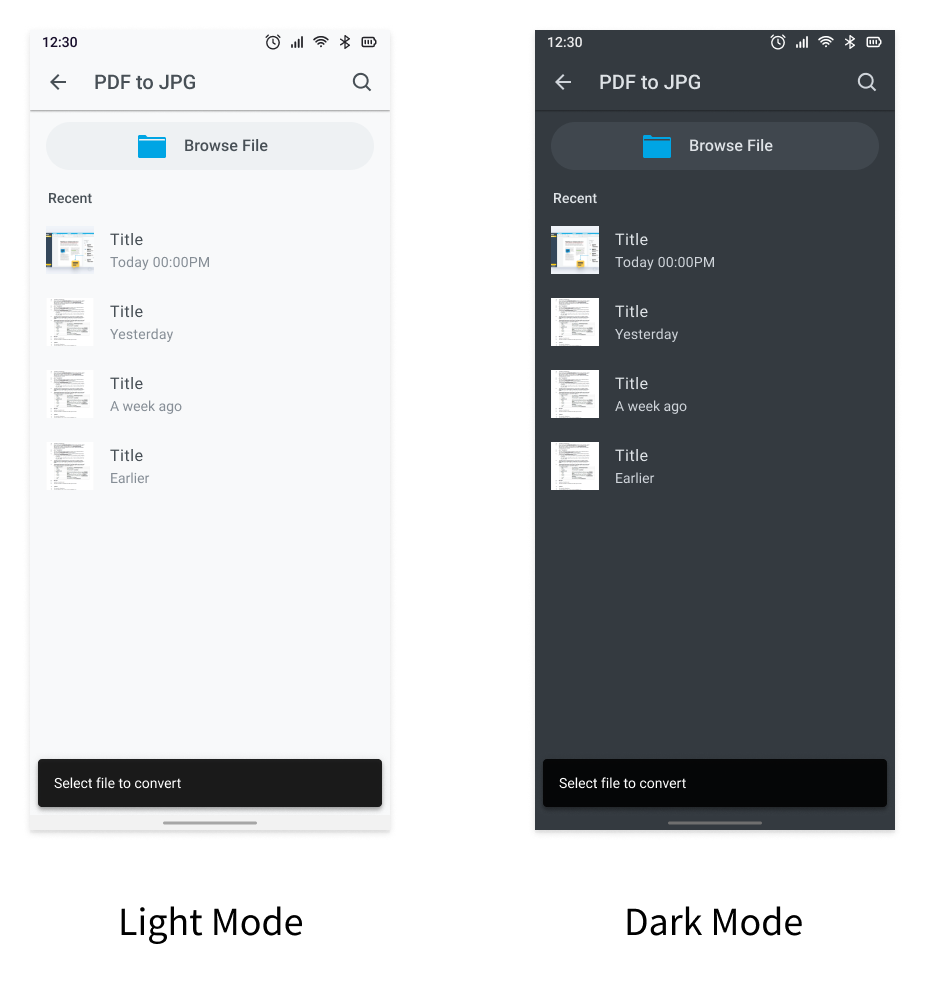
After the flow has been agreed upon, I then asked the user interface designers to create the high-fidelity wireframes and prototype in Figma. This product was designed simultaneously in light mode and dark mode, as it is the standard of the company to have themes available in both.
CHAPTER FOUR
EVALUATION
| The Launch
In April 2023, the product relaunched as scheduled. The app received positive feedback from customers:
“The best for PDFs… it's not complicated, and it doesn't use third party servers… I haven't found anything better out there.”
“Finally a PDF reader that does what I need. I've tried several and this is the rare one… this reader also loads documents quickly. Thank you for a great app!”
| Did I Reach My Leadership Goals?
Layoffs result in a difficult situation for everyone involved, so it was not surprising when my team's engagement score was at an all time low in January 2023.
I ensured my designers had a safe space to voice any concerns and frustrations, and took time to check in with them individually to help them navigate this new downsized environment.
I'm proud of them for overcoming this difficult time and I'm happy to report that three months later, the team's engagement score rose by 20%. I'm confident they will keep pushing high standards for design work.
This journey was a collaborative effort in partnership with a great group of Directors, Heads, and VPs who trusted me to lead this design team and build cool products.
| How About the Project Goals?
When we first started working on the product, we aimed to increase the number of downloads to 7 million. Three months after the launch, we surpassed our target goal and hit 10 million!
The finance department also happily reported that the revenue generated from this product increased the overall market share of the business. I was pleased to hear we produced tangible results.
| The Impact
Below is a quick summary of our data obtained in the span of a quarter:

Overall, we considered this project a success since we exceeded our target metrics. I can only wonder how much better this app would have performed with a full design workforce.
CHAPTER FIVE
CONCLUSION
| Challenges and Lessons
As with many leaders and companies within the tech space, I found 2023 to be a rocky year due to the financial troubles the country was experiencing.
With any layoff event, a tough challenge I encountered was that budget cuts and freezes meant designers couldn't receive a raise or a promotion. Understandably, this caused a mix of emotions during our performance review conversations.
I found what helped was to be flexible and come up with non-monetary rewards to motivate good performance. Some examples were more PTO, stock options, flex days, and a peer recognition programs.
This way I was able to help my designers weather the storm and ease into this new downsized environment.
| Up Next
Thank you for reading! Take a look at my case study on managing the design of a video product at Apryse here.